|
| Coyote transport |
Well.
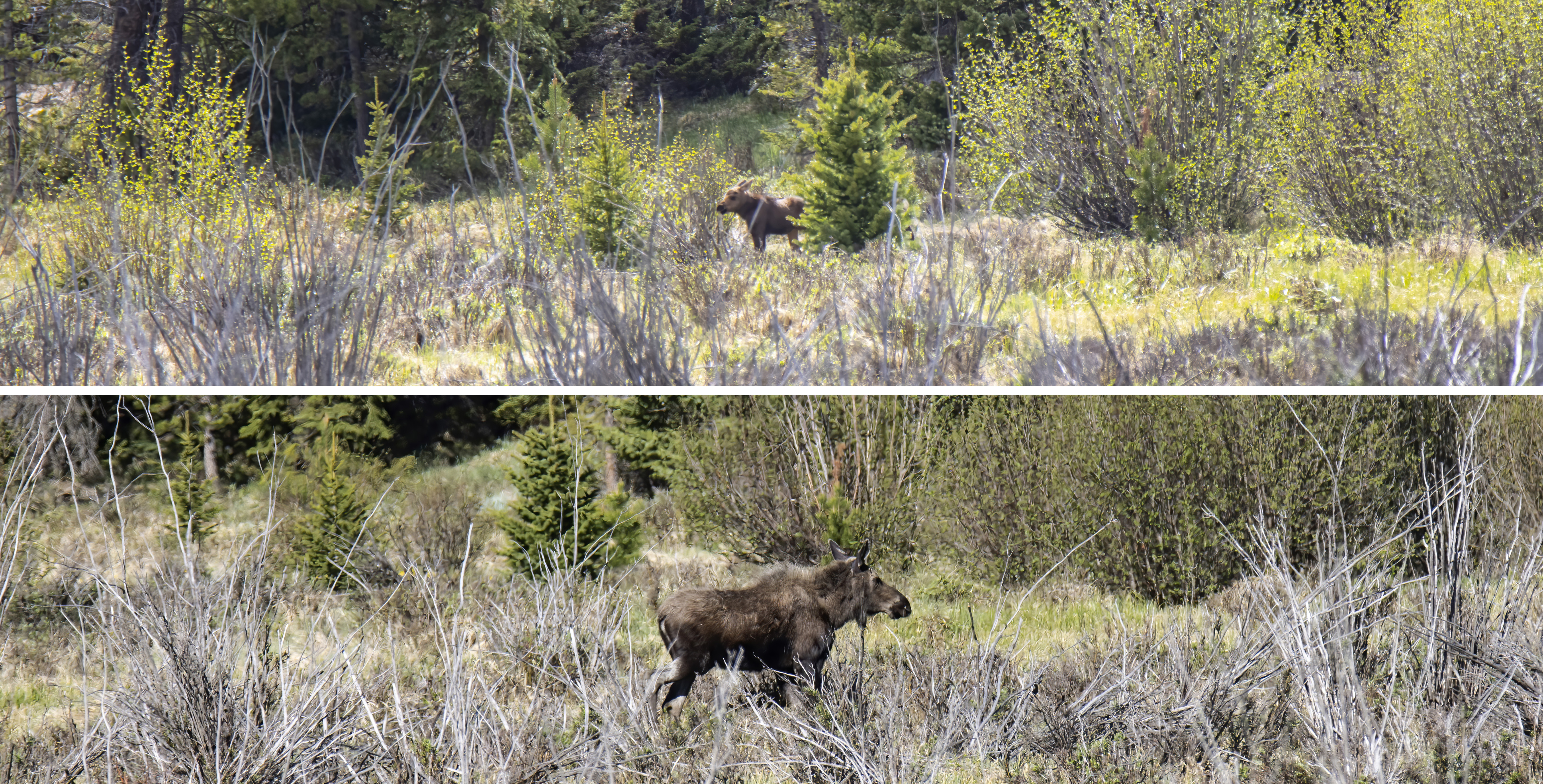
Even though we were staying on the west side to look for Moose, we knew we’d have to try to find these little cuties. Especially since our recent trip to Grand Teton and Yellowstone had failed to yield baby Grizzly Bears. We needed to see some babies.
So, on our first day in RMNP, when we were getting frustrated trying to find baby Moose, we drove back over Trail Ridge Road to try and find the Coyotes.
 |
| Well, we did see baby Moose |
It was a partial success. We didn’t see the Coyotes, but folks confirmed that they had been seen regularly.
They pointed out the original den, which the Coyotes had recently vacated because Elk had been harassing them.
And, they showed us the new den that the parents had moved the pups to. It was a tiny bit further back in the field, but not too bad and out in the wide open.
 |
| We did see a Wyoming Ground Squirrel |
Although there had been nine pups, we were told us that only (only?) seven had been seen recently. Presumably something had happened to two of them; maybe a predator; maybe failure to thrive when competing with so many siblings for food. An average Coyote litter is six, so this was a large brood.
We waited awhile, but since it was mid-day, we decided we should come back on our way home in the afternoon the next day because we were more likely to see them in the late afternoon/early evening.
When we came back on our way back to Fort Collins, they weren’t out, but other photographers told us they had seen an adult remove a pup and carry it off across the field and into the woods. It appeared that the adults were moving the pups to a den even farther away and out of sight. This would probably be our only chance to see them.
 |
| The new den was off behind this fence |
And, we didn’t have to wait long.
The Coyote Show
Suddenly, an adult appeared from the tree line and walked toward the den. We presume Mom, but it could have been Dad because both parents care for the young. To make it easy, I will call the adult Mom for the rest of the post.
 |
| Coming in from the forest |
She slowly and cautiously approached …
 |
| Just one pup out |
As she moved closer, the pups came out. They were very happy to see her because Parent = food! …
 |
| Ultimately, we saw six pups |
Over the course of the afternoon, we saw her remove three pups and carry them off, one at a time.
 |
| Off to our new home |
Based on a fluff of errant fur, it appears that we saw the same adult return to the den each time after leaving with a pup.
 |
| Back again |
We couldn’t stay forever, so we left as the light started to fail. But, we assumed the parents moved them all that night. Based on lack of later posts, that seems to be correct.
Each time Mom showed up – the second time after a long absence and the third after a short duration – she seemed to bring food. On this video, it appears she may have had a Vole or Mouse secreted in her mouth that she turned over to the pups.
 |
| Greeting (AKA "Do you have dinner?") |
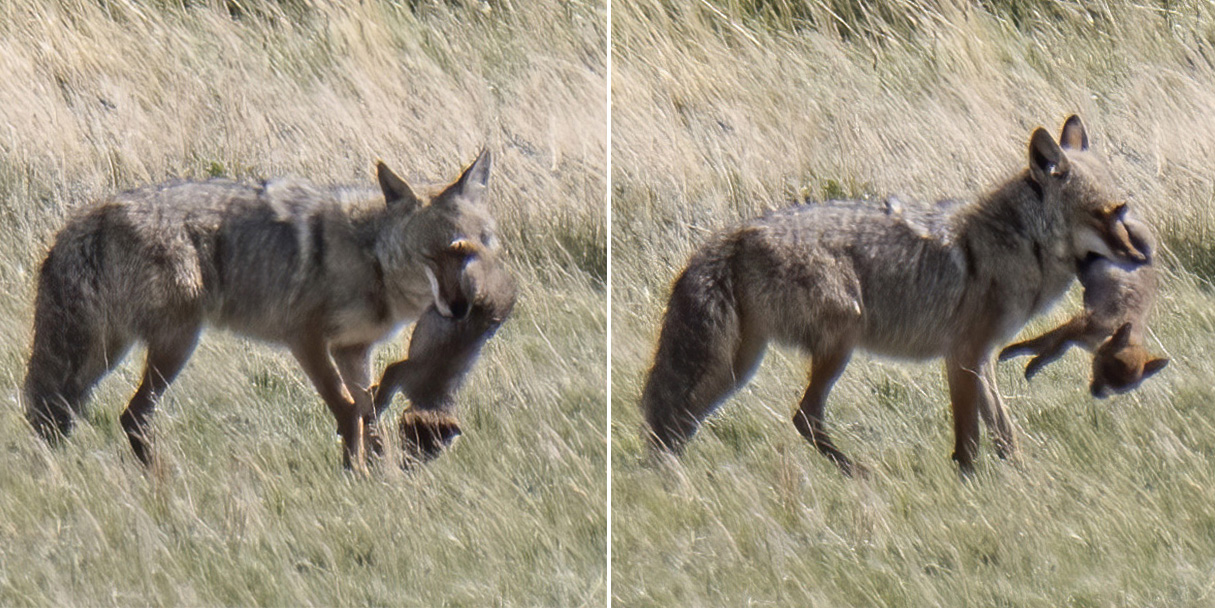
When she moved the pups, it was an arduous process. We had assumed she would carry them by the nape of the neck like a cat carries a kitten. But, instead, she picked them up by the hind quarters.
 |
| I guess that's how they do it |
It took a while to get a good hold and she generally had to stop and reposition a couple of times before she could take off.
 |
| The pick-up took some time |
It was funny to watch the squirmy pups dangling head-down as she trotted away, across the field and under a fence into the trees.
 |
| So cute, but it looks uncomfortable |
Each time, the other pups tried to follow ...
 |
| "Can we come?" |
… and, at times, she seemed to sternly indicate that they needed to be patient ...
 |
| "Stay here" |
They always gave up and returned to the den, sometimes going in and sometimes playing outside among themselves …
 |
| Playing |
 |
| "Hi, Mom!" |
I am sure the moving continued into the dark (unless the parents stayed in separate dens with some of the pups for the night until the move was completed). I would have loved to see what the last pup remaining did when he/she watched the second-to-last sibling being carried off.
 |
| A long process |
But, seeing what we saw was fantastic.
 |
| My first ever Coyote pups |
About Coyotes
I have posted lots of Coyote photos over the years. But, I don’t think I have every given an overview on them.
 |
| Mountain Coyote; Yellowstone National Park |
A canine native to North America, the Coyote is related to, but much smaller than the Gray Wolf we also have in the continental U.S. When seen together, this is obvious ...
 |
| Coyote chasing a Gray Wolf; Photo: Caty Stevens |
... but alone differentiation can be harder. Coyotes have longer ears and a thinner frame, face and muzzle than Wolves. They carry the tail downwards when running or walking, rather than horizontally as the Wolf does.
 |
| Coyote on the move |
Coyotes weigh an average of 15 to 45 lbs., with the male just slightly larger than the female. Total length ranges on average from three feet to five and a half feet of which the fluffy tail is about 16 inches. The largest Coyote on record was a male killed in Wyoming in 1937 that measured four feet 11 inches from nose to tail and weighed 75 lbs.
Unlike Wolves, Coyotes don’t have much color variation, generally being gray or tan, sometimes with reddish hues.
 |
| Pups are much darker |
Widely distributed and abundant throughout North America, the species is extraordinarily versatile, able to adapt to and expand into environments modified by humans, including lots of urban areas. There are 19 recognized subspecies ...
 |
| Mearn's, Northern and Eastern Coyotes |
... the ones in RMNP are Mountain Coyotes.
 |
| Mountain Coyotes in Yosemite (where their eyes are greenish) and Rocky Mountain National Park |
Part of their adaptability is their highly flexible social structure. Sometimes they live in family units; sometimes in loosely knit packs of unrelated individuals.
Primarily carnivorous, Coyotes eat deer, rabbits, hares, rodents, birds, reptiles, amphibians, fish and invertebrates, with occasional fruits and vegetables.
 |
| They also eat carrion; this one is on a Bison that a Grizzly had finished with in Yellowstone |
Humans are the Coyote's greatest threat, followed by Mountain Lions and Gray Wolves. But, Coyotes have also been known to mate with Wolves, producing "Coywolf" hybrids. They can also mate with domestic dogs. Most North American Wolves have some Coyote DNA.
While gregarious, Coyotes are not pack-dependent, probably because they are not specialized large prey hunters. Unrelated Coyotes may join forces for companionship or to bring down prey too large to attack singly.
 |
| Most hunting is for small animals done by an individual Coyote |
These "nonfamily" packs are only temporary and may consist of bachelor males, single females and subadult young. Coyote howls are made by solitary individuals.
Coyotes are strictly monogamous. When the female is pregnant, the male frequently hunts alone and brings back food for the female. The female may line the den with dried grass or fur pulled from her belly.
 |
| Litters range in size depending on food abundance |
Coyote pups weigh about seven to 18 oz. at birth and are completely dependent on milk for their first ten days until their eyes open. The incisors erupt at about 12 days, at which time the parents begin supplementing their diet with regurgitated solid food.
 |
| Pups begging for food |
Pups get their canine teeth at 16 days and second premolars at 21. They walk by 20 days and run by six weeks. By the age of four to six weeks, pups are given small food items such as Mice, Rabbits or pieces of ungulate carcasses.
 |
| So these pups were around six weeks old |
The den is abandoned by June to July and the pups follow their parents in patrolling their territory and hunting. Pups may leave their families in August, though can remain for much longer. Coyotes attain adult size at eight months and gain adult weight by nine.
 |
| Adult Coyotes can be rangy, especially in hot climates |
Females that don't have pups sometimes assist their sisters or mothers in raising theirs, or join with their siblings until the next time they can mate.
Coyote attacks on humans are uncommon and rarely cause serious injuries, due to the relatively small size of the Coyote, but have been increasingly frequent, especially in California. There have been only two confirmed fatal attacks: one on a child in California and another on a 19-year-old in Nova Scotia, Canada. The increase in attacks is probably a result of habituation and proximity as Coyotes move more and more into suburban and urban areas.
 |
| The preference is small prey |
As of 2007, Coyotes were the most abundant livestock predators in western North America. Re-wilding cattle, which involves increasing the natural protective tendencies of cattle, as a method for controlling Coyotes is gaining popularity among ranchers.
We see Coyotes frequently in Colorado. They often walk through my yard.
 |
| I took this from my porch |
And, about the photos: Most are not really up to my usual standards because, like Wolves, Coyotes tend to stay far away from humans, especially when raising pups.
 |
| Fuzzy, but cool |
So, the photos are literally long shots.
 |
| And, this is still zoomed |
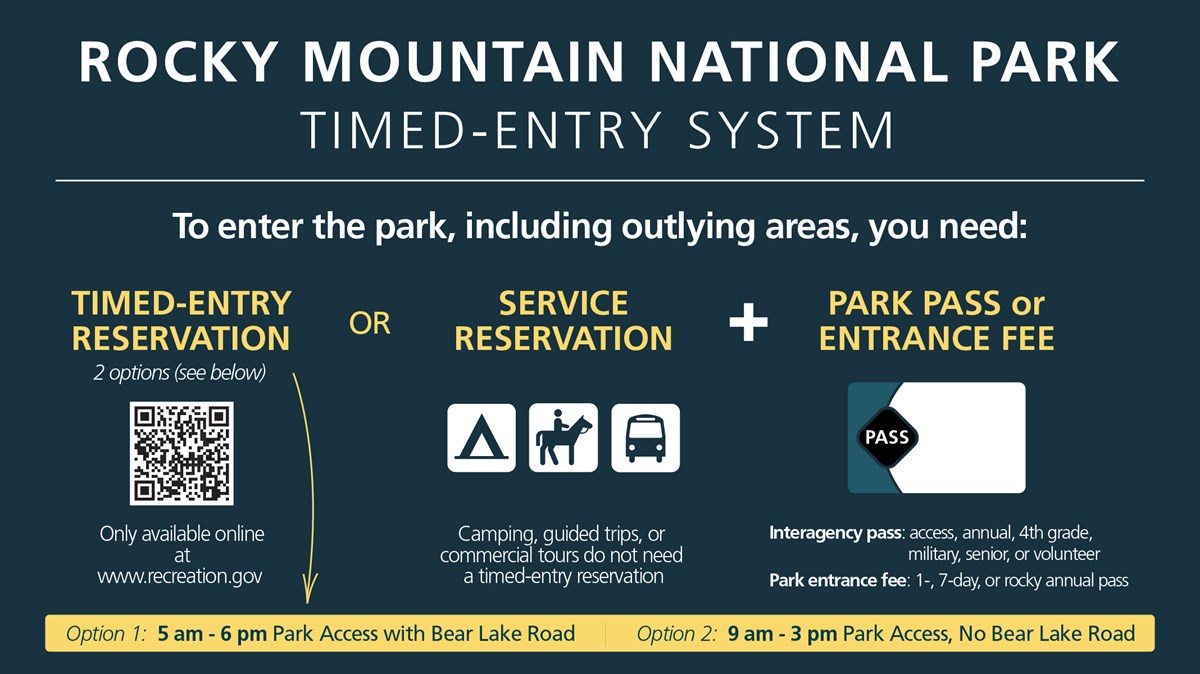
I mentioned that Caty and I go to Rocky Mountain National Park every year for Moosecapade. We always go in late May/early June to see the babies. And, even though we didn't see a lot this year, I have faith that future Moosecapades will yield more sightings -- probably on both sides of the Park rather than just the west side.
This year, we went back to RMNP in late July with the whole family because my sister, Linda, was visiting from Illinois.
 |
| The family |
I gotta say that the Moosing was pretty bleak. We didn't see many (eight or nine) and none we in good light and good locations. But, hey there were Moose ...
 |
| A bull inside a reforestation enclosure on the east side |
... on both sides of the Park ...
 |
| Almost all the Moose we saw on the west were collared |
On the west side, we searched and searched, enjoying other wildlife, but not many Moose.
We even walked to the Holzwarth Historic Site for some fun ...
 |
| Caty trying her hand a lassoing |
... and entertainment from a very cute Golden-mantled Ground Squirrel ...
 |
| Enjoying some flowers and seeds |
... and an equally cute Least Chipmunk ...
 |
| So cute! |
On the east side, we had a lovely walk around Sprague Lake (because we did snag a Bear Lake corridor pass) that provided great views ...
 |
| Sprague Lake |
... but no Moose.
And, we had some fun with Pikas ...
 |
| Cuties on the top |
... and Marmots ...
 |
| Yellow-bellied Marmot |
... at the top of Trail Ridge Road ...
 |
| Lava Cliffs |
It was so warm and still that we even walked to the viewpoint at the Forest Canyon Overlook without getting cold or windblown. Normally, it's brutal. Not this time ...
 |
| The view |
The day was lovely ...
 |
| With my daughters |
But, not a lot of animals.
 |
| Well, some Elk! |
So, I think we're still on track to do Moosecapade in the late spring/early summer with anther foray in early fall to see big boys with antlers.
 |
| The antlers are already big (these bulls were on the east side) |
Next year, we'll see how it goes.
 |
| At least the views were good |
Trip date: June 11-12, 2022